
- What draws you to Venice in the decade you chose?
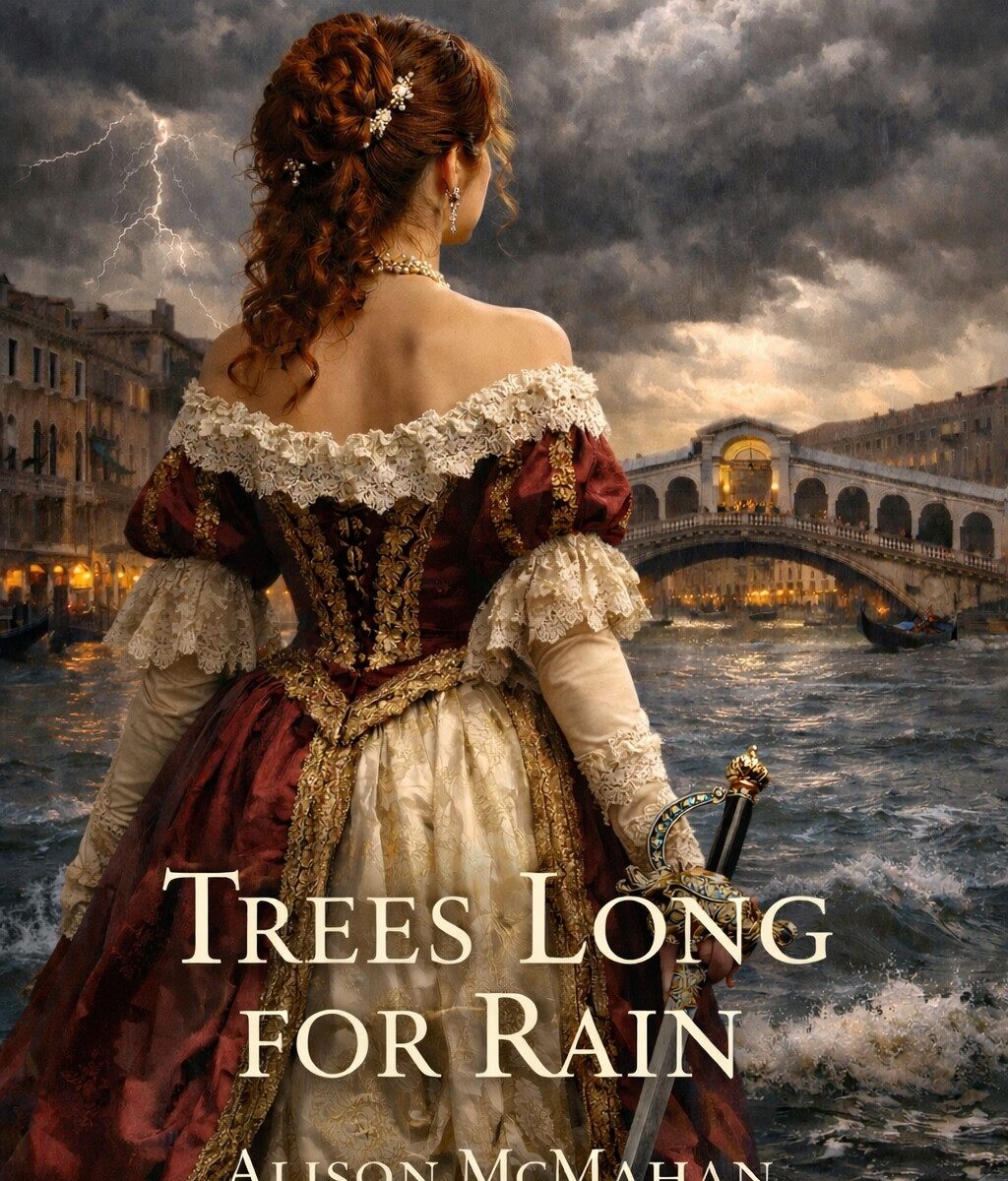
I was an adjunct professor in Film Studies at the University of Amsterdam from 1997 through 2001. Once a year I would attend a film festival in Pordenone, and to get to it I had to fly into Venice. Whenever possible I spent an extra day in Venice. I also went there for several longer visits. I never tired of it. I wanted to write about it, especially about Venetian music. Opera was born in Italy and La Fenice in Venice is one of the best opera houses. Everyone writes about Vivaldi, a century later, but I wanted to set a story at the moment Opera was born and the plague had just decimated most of Europe, including Venice. Disasters like that end life the way we know it, but at the same time make space for a new order. That led me to 1643.
- I particularly enjoy the wide range of cultures you describe so well, from the Jewish ghetto to the shipping docks to Monteverdi’s choir performances. You have courtesans among your characters who surprised me with their social mobility. Can you say more about being a courtesan in Venice at that time?
I discovered the Venetian courtesan class when I was researching the possibilities for Isabella, the heroine of my novel, to have a musical career. Courtesans were a legal profession and paid their taxes! Noble wives were uneducated, so patrician men had to look for intellectual companionship as well as extra sex elsewhere. Courtesans often had salons where artists and intellectuals gathered and they sponsored, and performed, in musical events. Their lifestyle had benefits such as agency, wealth, and the freedom to follow intellectual and artistic pursuits, but they also faced dangers like syphillis, the dangers of pregnancy (and inability to work while pregnant), and legal persecution which came in the guise of accusations of witchcraft.
There’s quite a bit of research on courtesans, and quite a few good books, both academic and historical fiction.
I have a substack newsletter that goes into more detail about the life of courtesans and includes links here: https://open.substack.com/pub/alisonmcmahan/p/singing-courtesans?utm_campaign=post-expanded-share&utm_medium=web
- Piero, a young castrato in Monteverdi’s choir and a friend of your two protagonists, also is a servant to the painter Strozzi. What did he do for Strozzi?
Strozzi had a fairly large studio and painted models from life. He painted the best portrait we have of Monteverdi. I looked often to his paintings to ascertain how the people in my novel would dress. I modelled some of my characters on his figures. You can read more about that on my substack, here: https://www.alisonmcmahan.com/newsletter/howtomeetpeoplefromthepast
After all that, I felt I owed him something. I didn’t have narrative room to add him as a character, so I made Piero his assistant, the person who keeps his studio tidy, grinds the powders for his paints, and sees to the needs of the models so that Strozzi could focus on his painting.
- What surprised you most in researching the background for your mystery?
The most surprising detail was also the detail that inspired me to write the book: I read somewhere that people in Venice were buried out in the lagoons or buried under the streets as streets were being laid. This was true until 1807 when the San Michele cemetery island was created. But the Jewish religion requires burial in the ground, so Jews were buried in the Jewish cemetery on the Lido.
I’d never given any thought to where Venetians were buried on my visits, so that detail stuck with me.
- I really admire your plotting throughout the novel. Did you know who did what from the beginning or did it evolve as you wrote and the characters grew?
This was my first novel so I was not very good at plotting. I wrote Isabella’s side first, then had to think and work some more to write Rafaele’s. I had a good friend beta reading for me at the time, and her help was invaluable. I had to rewrite a few times and adjust to the romance requirement of dual points of view. When I was really stuck, more historical research usually helped, or listening to music of the era. Once I set myself the goal of fleshing out each character as much as possible, no matter how minor they were, things got easier. I fell in love with some of the minor characters and now I’m planning sequels around them.
- What are you working on now?
I write something every quarter for ThrillRide magazine. The last issue (due out on June 1) had the theme of “Assassins & Vigilantes; I wrote a story about a man whose silent movie obsessions lead him to commit a series of murders. I love writing thriller stories for them! The story is entitled “Boss of the Plains.” I also wrote the issue essay. My essay focused on new psychological research that seems to prove that Psychopathy is not a Thing. If that’s the case, how do we, as mystery and thriller writers, deal with the issue of evil? Look for both in ThrillRide in June! The next issue has a theme of Capers. I’m working on something for that.

I’m also writing the sequel to Trees Long For Rain. It jumps back in time to when Monteverdi was at the court of the Gonzagas. Monteverdi wrote parts for the first woman opera singer, Madame Europa, who originally performed Monterverdi’s L’Arianna. The novel will mostly be about composer and musician Salamone Rossi, who composed music for the court but also composed music for the synagogue in the Mantua ghetto.
There will be a third book in which two characters from this world sail to Toledo to rescue some precious manuscripts, including musical manuscripts, after the Moriscos were expelled from Spain.
My agent has the first book of a series on submission. It’s a thriller about a Cambodian girl who flees the Khmer Rouge and ends up in Long Beach, CA. She’s fostered by a social worker and a cop, and when she grows up she becomes a cop like her foster father. However, she is still a Buddhist, so she has an interesting inner conflict. Especially in 1990, when Long Beach was plagued by gang wars between Khmer and Mexican gangs.
Cambodia resonates with me. We were there just before the war started. We felt all the tensions of a dying monarchy, the atmosphere of hate of less privileged helpers to more educated and aspiring ones. Khmer Rouge was not a surprise. Conincidentally, I’ve just been writing about that trip. It was a devastating tragedy. I still see our driver at Siem Reap in my dreams. He was aspiring and I’m sure he would have been the first target of his envious peers.
Alison, thank you so much for your time. Follow her on:
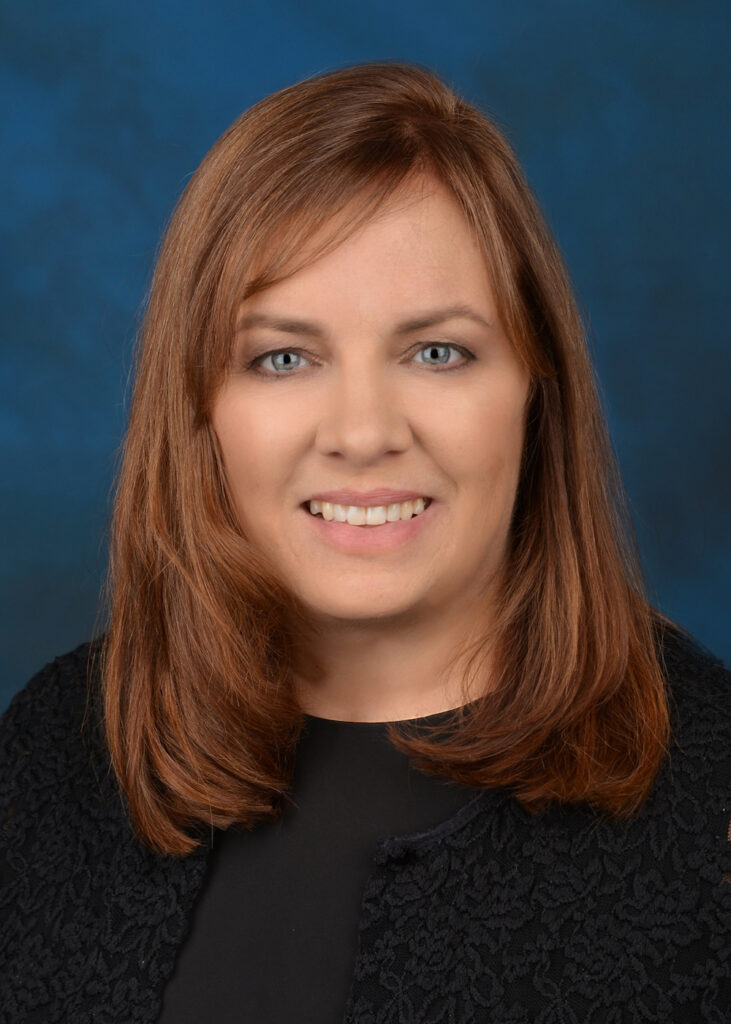
About Alison McMahan
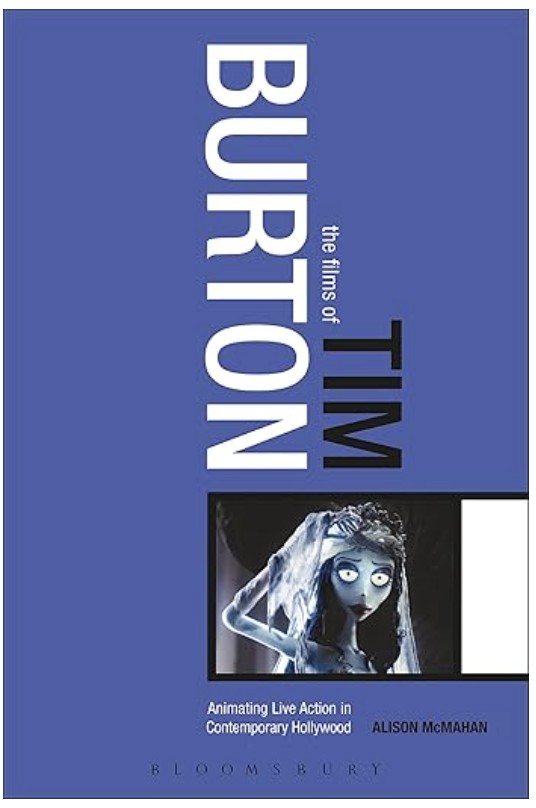
Alison McMahan is a native of Los Angeles, California, but grew up in Mexico and Spain. She is an award-winning screenwriter, filmmaker, and author. Her films include the documentary Bare Hands and Wooden Limbs (2010), about landmine survivors in Cambodia, narrated by Sam Waterston. Her books include a critical study of the work of the first woman filmmaker, Alice Guy Blaché, Lost Visionary of the Cinema (Bloomsbury 2002), translated into Spanish and Japanese,
https://www.bloomsbury.com/us/alice-guy-blach%C3%A9-9780826451576/
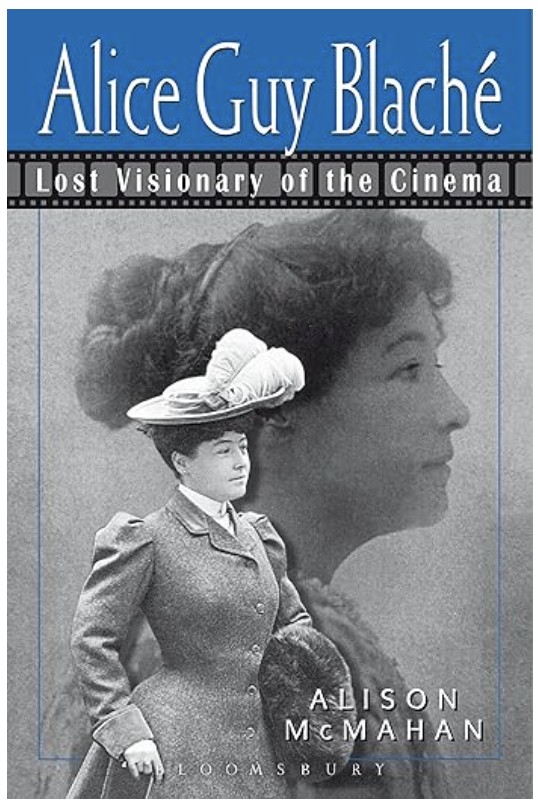 adapted as a play by La Recua Teatro in Toledo, Spain (2012) and adapted into the documentary, Be Natural, by Pamela Green (2018). She is a regular contributor to ThrillRide Magazine and has had many mystery stories published in anthologies and in the Scream and Scream Again middle-grade horror anthology edited by R.L. Stine for HarperCollins. She’s a two-time Derringer finalist and an “Other Distinguished Mystery Stories” author, Best American Mystery Stories.